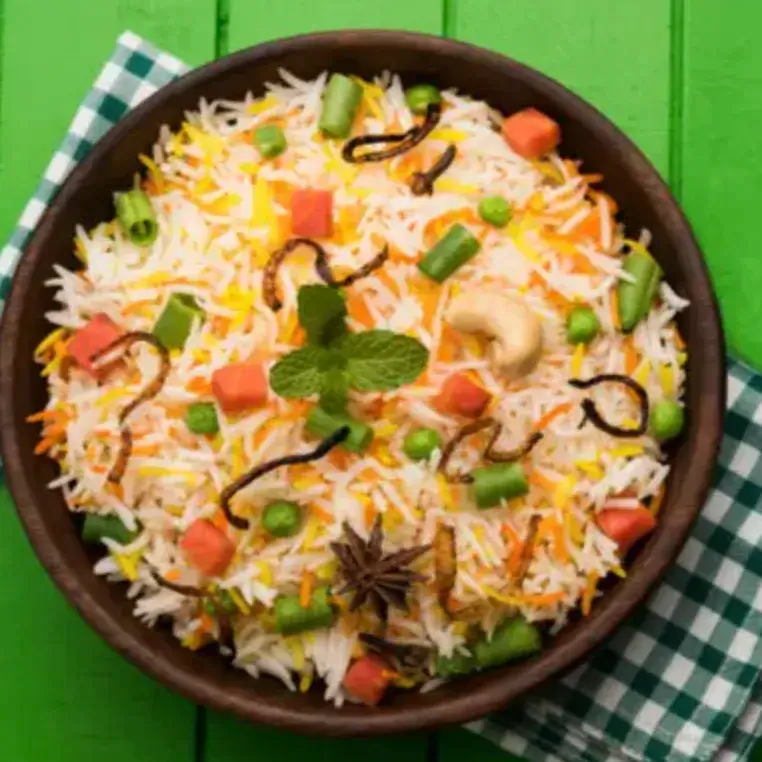
What is Vegetable Biryani? A Crown Jewel of Indian Festive Cuisine
Vegetable Biryani is an exquisite, celebratory Indian rice dish where fragrant basmati rice and spiced vegetables are layered together and cooked 'dum' (sealed with steam) until each grain is perfumed with saffron, cinnamon, cardamom, and cloves. This vegan, premium dish is the centerpiece of weddings, festivals, and special dinners - it's complex, aromatic, and visually stunning. Unlike everyday rice dishes, biryani demands patience and technique: partially cooked rice is layered with marinated vegetables, fried onions, nuts, dried fruits, and fresh herbs, then slow-steamed to perfection. The result? Fluffy, separate grains of rice infused with layers of spice and vegetable essence. Served with vegan raita, this is Indian cuisine at its most regal.
Ingredients
- 2 cups basmati rice
- 1 carrot, cubed
- 1/2 cup peas
- 1 potato, cubed
- 1/2 cup chopped green beans
- 1 onion, sliced
- 2 tomatoes, chopped
- 4 garlic cloves
- 1 piece ginger (3cm)
- 1 cinnamon stick
- 4 cloves
- 4 cardamom pods
- 1 teaspoon cumin seeds
- 1 teaspoon garam masala
- 1 teaspoon turmeric
- 1/2 teaspoon saffron (optional)
- 4 tablespoons vegetable oil
- 1/4 cup cashews
- 1/4 cup raisins
- Fresh cilantro and mint
- Salt to taste
Steps
Step 1: Wash and soak rice for 30 minutes. Cook until 70% done. Drain and set aside.
Step 2: Fry onion until golden. Reserve half for garnish.
Step 3: In the same pan, sauté garlic, ginger and whole spices.
Step 4: Add tomato and cook until mushy.
Step 5: Add vegetables, turmeric and salt. Cook for 5 minutes.
Step 6: In a large pot, layer rice and vegetables alternately.
Step 7: Sprinkle garam masala, cashews, raisins, herbs and fried onion.
Step 8: Drizzle with saffron soaked in warm water.
Step 9: Cook on low heat for 20 minutes or in the oven.
Step 10: Serve hot with vegan cucumber raita.
Master-Level Secrets for Perfect Vegetable Biryani
Choose and Prepare the Right Rice Use aged (1+ years old) basmati rice - not everyday rice. Aged basmati has lower moisture content, elongates beautifully when cooked, and produces separate, non-sticky grains. Wash rice in 5-6 changes of cold water until water runs clear (removes surface starch). Soak for exactly 30 minutes - no more, no less. Cook rice in abundant salted water (like pasta) until 70-80% done - it should still have a slight bite (a white core when broken). Overcook now, and you'll have biryani mush. Immediately drain and spread on a large plate to stop cooking and let steam escape.
Master the 'Dum' Steaming Technique Authentic biryani is cooked 'dum' (slow-steamed in a sealed pot). After layering rice and vegetables in a heavy-bottomed pot, seal it airtight: cover with a tight-fitting lid, then seal edges with a simple dough made from whole wheat flour and water. Place a heavy pan or tawa (griddle) under the pot to diffuse heat. Cook on the lowest possible flame for 20-25 minutes. NO PEEKING until done - the trapped steam is what cooks the biryani. For oven method: seal pot as above and bake at 350°F (180°C) for 25 minutes. The sealed pot captures all the aromatic steam, perfuming every grain of rice.
Build Layers for Maximum Flavor Biryani is about layering flavors, not mixing. Follow this exact sequence in your pot: Bottom layer - half the cooked vegetables. Then half the partially cooked rice. Sprinkle with fried onions, fresh cilantro, mint, roasted cashews, raisins, garam masala, saffron milk. Second layer - remaining vegetables. Then remaining rice. Final toppings - rest of the fried onions, herbs, nuts, saffron. Why layering matters: each grain of rice absorbs different levels of vegetable and spice flavor, creating complex, varied bites throughout the dish. Never stir before serving - gently fold (like folding a soufflé) using two forks to preserve grain integrity and layer distribution.
Vegan Tips
1: Use aged basmati rice for best results.
2: Don't stir the layers to keep grains intact.
Royal Vegetable Biryani Variations
Explore India's diverse biryani traditions with these regional and creative adaptations:
Hyderabadi Vegetable Biryani (Kachchi): The most authentic version - layer raw marinated vegetables and partially cooked rice, then dum cook. Vegetables release juices that flavor the rice from within. Add 1 cup of coconut milk for Hyderabadi creaminess.
Lucknowi (Awadhi) Veg Biryani: More subtle and aromatic with less heat. Use fried onions cooked in vegan ghee, whole spices like mace (javitri) and nutmeg, and rose water + kewra water in the saffron milk. The most elegant, perfumed biryani.
Kolkata Veg Biryani: Characterized by the addition of boiled potatoes (whole or halved) and golden raisins. Slightly sweeter than other biryanis. Traditionally includes a hard-boiled egg (use roasted potato 'egg' for vegan).
Soya Chunk Biryani: Replace vegetables with 2 cups of hydrated soya chunks (meal maker). Soya's meaty, chewy texture makes this a favorite for those seeking high-protein, chicken-like texture.
Mushroom Biryani: Use 500g of button or cremini mushrooms instead of mixed vegetables. Mushrooms' umami depth creates an incredibly savory, almost meaty biryani.
Instant Pot Vegetable Biryani: Sauté whole spices, onions, and vegetables using 'Sauté' mode. Add rice, water (1:1.5 rice:water ratio), then pressure cook on High for 6 minutes. Quick release - but closed-pot 'dum' not possible.
Baked Sheet Pan Biryani: Not traditional but perfect for crowds. Sauté vegetables and spices, spread evenly on oiled baking sheet. Top with drained par-cooked rice, wrap tightly with foil, bake at 375°F (190°C) for 20 minutes.
Frequently Asked Questions About Vegetable Biryani
What's the difference between Biryani and Pulao?
This is THE most common question! Key differences: 1) Technique: Biryani uses 'dum' (layering and slow-steaming). Pulao uses 'absorbed method' (cooking rice with vegetables in shared liquid). 2) Rice texture: Biryani has separate, fluffy grains. Pulao is more moist and cohesive. 3) Spice level: Biryani is more aromatic and layered with whole spices. Pulao is simpler. 4) Layering: Biryani has distinct layers of rice and vegetables. Pulao is mixed together. 5) Complexity: Biryani is celebratory (weddings, festivals). Pulao is everyday comfort food. Think of Biryani as the Champagne and Pulao as the everyday sparkling wine - both wonderful, but Biryani is elaborate, special occasion perfection.
Can I make Vegetable Biryani without saffron? What substitutes work?
Yes! While saffron adds signature color and aroma, it's optional. Substitutes: 1) Turmeric - 1/4 teaspoon yields yellow color but different flavor profile. 2) Yellow food coloring with 1/4 teaspoon rose water - mimics color and adds floral note. 3) Annatto seeds (achiote) soaked in 2 tablespoons warm water for 30 minutes - natural red-orange color. 4) Grated beet juice - 1 tablespoon mixed into warm water gives pinkish red color. 5) Simply skip it - biryani is still delicious! For aroma, add 1/4 teaspoon of kewra water or rose water instead. If buying saffron, a little goes far - 2-3 strands per cup of rice.
How do I store and reheat leftover Biryani?
Biryani actually improves overnight as flavors meld! Refrigerate in an airtight container for up to 3 days. Best reheating method: STOVETOP (preserves texture). Add biryani to heavy-bottomed pan with 2 tablespoons water, cover, and heat on lowest flame for 8-10 minutes - the steam gently reheats without drying grains. OVEN method: Place in covered baking dish at 300°F (150°C) for 15 minutes. MICROWAVE method: Add 2 tablespoons water, cover with damp paper towel, microwave for 1-2 minutes (but can make rice slightly chewy). FREEZE for up to 2 months (freeze in portions). Thaw overnight in refrigerator before reheating.
What should I serve with Vegetable Biryani?
Biryani is traditionally served with 2-3 accompaniments that provide cooling and textural contrast: 1) Vegan Cucumber Raita - cooling yogurt dip (blended silken tofu or vegan yogurt with grated cucumber, roasted cumin, mint). 2) Mirchi Ka Salan - tangy peanut-coconut curry with chili peppers (a Hyderabadi specialty). 3) Vegan Boondi Raita for crunch. Also serve with: fresh onion salad (kuchumber - chopped onions, tomatoes, cilantro, lemon), mango or lime pickle (aachar), papadums (roasted or fried), and a wedge of fresh lemon. For drinks: masala chai or salted lassi (vegan).
Nutritional Information (per serving)
Calories: 485 kcal | Protein: 12g | Carbohydrates: 75g | Fat: 15g | Fiber: 8g | Sugar: 12g | Iron: 20% DV | Vitamin A: 45% DV | Vitamin C: 35% DV | Folate: 35% DV

