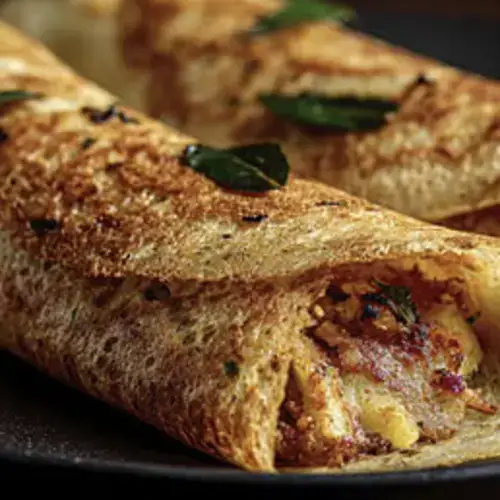
What is Masala Dosa? South India's Most Iconic Breakfast
Masala Dosa is the crown jewel of South Indian cuisine - a paper-thin, golden-crispy crepe made from fermented rice and lentil batter, filled with a aromatic spiced potato masala. This iconic dish is naturally vegan and gluten-free, served with fresh coconut chutney and tangy sambar (lentil-vegetable stew). While making authentic masala dosa requires patience (24+ hours for soaking and fermentation), the reward is an unparalleled combination of textures: shatteringly crisp exterior, tender potato filling, and complex fermented flavors. Perfect for weekend brunch or a special breakfast.
Ingredients
- 1 cup rice (preferably dosa rice)
- 1/2 cup urad dal (skinned black lentils)
- 1/4 teaspoon fenugreek seeds
- Salt to taste
- 3 medium potatoes, cooked and mashed
- 1 onion, chopped
- 1 teaspoon mustard seeds
- 1 teaspoon cumin seeds
- Curry leaves
- 1 teaspoon turmeric
- 1 green chili, chopped
- Fresh cilantro
- Vegetable oil for cooking
Steps
Step 1: BATTER: Soak rice, urad dal and fenugreek seeds for 6 hours. Drain and blend with salt until smooth. Ferment for 8-12 hours.
Step 2: FILLING: Heat oil, add mustard and cumin seeds until they crackle. Add onion, curry leaves, chili and turmeric.
Step 3: Add mashed potatoes, cilantro and salt. Mix well.
Step 4: ASSEMBLY: Heat a non-stick skillet. Pour batter and spread into a thin circle. Drizzle oil around edges.
Step 5: When golden, place filling in the center and fold the crepe.
Step 6: Serve hot with coconut chutney and sambar.
Secrets for Perfect Masala Dosa - From Batter to Crepe
Master the Fermentation Process Fermentation is the heart of authentic dosa. Use 4:1 ratio of rice to urad dal for crispy results. Add fenugreek seeds - they naturally aid fermentation and give dosas their signature golden-brown color. Ideal temperature: 25-30°C (77-86°F). In cold climates: place batter in oven with light on or inside microwave with a cup of hot water. Batter is ready when doubled in volume with bubbles throughout and sour aroma. For guaranteed results, add 1/4 teaspoon of active dry yeast in winter.
Achieve the Perfect Batter Consistency Batter consistency determines dosa texture. After fermenting, the batter thickens - thin it with cold water (not warm!) until reaching pouring consistency like pancake batter (not runny like crêpes). Test: dip a ladle - the batter should coat it thinly but not be watery. Too thick = thick, soft dosas. Too thin = dosas stick to pan. The ideal batter spreads easily but still leaves a lacy pattern. Add water gradually - you can always add more.
The Cast Iron Skillet Technique for Crispy Dosas Use a well-seasoned cast iron skillet or carbon steel tawa for restaurant-style crispiness. Heat pan on medium-high - sprinkle water drops; they should sizzle and evaporate immediately. Lightly oil with a cut onion dipped in oil (traditional method) or use a paper towel. Pour batter from edges to center in a circular motion. Drizzle 1-2 teaspoons of oil around the edges. Cook without flipping until edges release naturally and bottom is golden and lacy. Never force the dosa - it should lift easily.
Vegan Tips
1: Fermentation is crucial - warm weather speeds up the process.
2: Batter should have pancake batter consistency.
3: Use a cast iron skillet for crispier dosas.
Delicious Masala Dosa Variations
Explore India's diverse dosa culture with these popular variations, all keeping the signature crispy crepe base:
Mysore Masala Dosa: Spread spicy red chutney (made with roasted chana dal, red chilies, garlic, and coconut) inside the dosa before adding potato filling. The spicy-savory combination is a Karnataka specialty.
Paper Dosa: Extra-thin, extra-large, and extra-crispy version. Use thinner batter (more water), spread very thin (almost transparent), and cook until thoroughly golden and crisp. Fold into a large cylinder and serve with filling on the side.
Ragi Dosa (Finger Millet): Replace 50% of rice with finger millet (ragi) flour for a healthier, iron-rich, nutty-flavored dosa. Darker in color but equally crispy.
Oats Dosa: Quick 30-minute no-fermentation version: blend oats, rice flour, and yogurt (or vegan yogurt). Great for instant cravings with fewer calories.
Paneer Masala Dosa: Add crumbled paneer (or tofu for vegan) to the potato filling for extra protein. Sprinkle with chaat masala and fresh coriander.
Cheese Masala Dosa: Dot the dosa with grated vegan cheese before adding potato filling - it melts into crispy-cheesy perfection (popular modern variation in Bangalore cafes).
Frequently Asked Questions About Masala Dosa
Why is my dosa not crispy? (Common troubleshooting)
Soggy dosas usually result from: 1) Batter too thick - thin with cold water; 2) Pan not hot enough - preheat properly; 3) Too much oil when spreading batter - use minimal; 4) Pan not seasoned properly - cast iron needs curing; 5) Fermentation incomplete - batter should be bubbly with sour aroma. Also avoid covering dosas while cooking - this traps steam and softens them.
Can I make dosa batter gluten-free? How long does it last?
Yes! Traditional dosa is naturally gluten-free (rice + lentils). Store fermented batter in refrigerator for up to 5-7 days. It continues fermenting slowly, developing more sour, complex flavor - many prefer 2-3 day old batter! Before using, bring to room temperature (30 minutes), stir well (fermentation can cause separation), test consistency - it will be thicker than fresh. Add splashes of cold water to reach pouring consistency.
What's the difference between dosa and crepes/pancakes?
Unlike Western crepes (wheat flour/milk/eggs) or pancakes (flour/buttermilk/eggs), dosa is made from fermented rice and lentil batter with no eggs or dairy. The fermentation process creates unique sour, savory notes and makes the batter light and airy. Dosa cooks from just one side (never flipped), creating a crispy exterior with a slightly soft interior. The result is far crispier than any gluten crepe and more complex than standard pancakes.
What are essential accompaniments for Masala Dosa?
Three classic pairings complete the dosa experience: 1) Coconut Chutney (creamy, cooling) - blend fresh coconut, roasted chana dal, green chili, ginger, cilantro, and curry leaves; 2) Sambar (tangy lentil-vegetable stew) - made with toor dal, tamarind, vegetables, and sambar powder; 3) Tomato Chutney (for Mysore style). Also try: potato palya (dry potato curry), peanut chutney, or simply ghee and gunpowder (idli podi - spiced lentil powder mixed with oil).
Nutritional Information (per dosa with filling)
Calories: 295 kcal | Protein: 8g | Carbohydrates: 52g | Fat: 6g | Fiber: 6g | Sugar: 3g | Iron: 15% DV | Vitamin B6: 12% DV | Manganese: 30% DV

