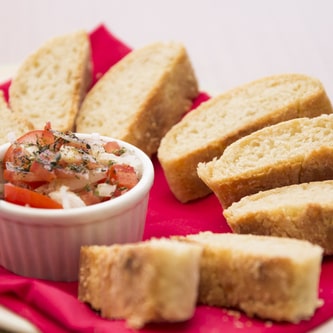
Authentic Italian Ciabatta - Vegan & Simple
Ciabatta (meaning 'slipper' in Italian) is known for its crisp, flour-dusted crust and irregular, airy crumb. This vegan version uses just 4 simple ingredients - flour, yeast, water, and olive oil - to create that signature open crumb structure and light, chewy texture. Perfect for sandwiches (panini), bruschetta, dipping in olive oil and balsamic, or serving alongside soups and stews. While this recipe requires patience for the folding and rising process (about 2 hours total active time), the reward is bakery-quality bread made completely plant-based.
Ingredients
- 1 packet of dry yeast
- 200 g wheat flour type 1
- 150 ml of warm water
- 50 ml of olive oil (can be less)
Steps
Step 1: Mix the flour and salt in a small bowl
Step 2: Mix the yeast with the warm water in a large bowl
Step 3: Pour the dry mixture into the liquid until it's a homogeneous, but sticky mass
Step 4: Take another basin, put half the oil in the bottom and deposit the dough on top
Step 5: Let her rest for 1 hour
Step 6: Once it has risen well, fold the dough twice very carefully and cover again
Step 7: You have to repeat this process two more times, with regular intervals for the dough to rise again
Step 8: Sprinkle flour on a smooth surface and place the dough carefully
Step 9: Divide the dough in two and leave them in the shape of a baguette (ciabatta), using the flour to model
Step 10: Place the dough on a baking sheet lined with baking paper
Step 11: Preheat the oven to 220 degrees celsius and bake for half an hour until the bread is golden
Chef's Tips for Perfect Ciabatta
The Sticky Dough is Right Ciabatta dough is intentionally very wet and sticky - this high hydration (75-80%) creates those large, irregular holes in the finished bread. Don't add extra flour!
Gentle Folding is Key When folding the dough during rising, be gentle. The goal is to strengthen gluten without knocking out air bubbles. Use wet hands to prevent sticking.
Use High Protein Flour Type 1 flour or bread flour has higher protein content (12-14%) which creates stronger gluten structure for that open, airy crumb. All-purpose flour works but won't be as airy.
Steam Creates Crust Place a small pan of water on the bottom oven rack during baking. The steam helps create that crispy, crackly crust.
Vegan Tips
1: You can serve the bread with vinaigrette or special sauces
Ciabatta Variations
Try these delicious twists:
🧄 **Garlic & Herb Ciabatta:** Add roasted garlic and fresh rosemary to the dough.
🍅 **Sun-Dried Tomato Ciabatta:** Fold in chopped sun-dried tomatoes and olives.
🌿 **Italian Herb Ciabatta:** Add oregano, basil, and thyme to the flour mixture.
🥖 **Seeded Ciabatta:** Top with sesame, poppy, sunflower, or pumpkin seeds before baking.
Frequently Asked Questions
Why is my ciabatta dense?
Common causes: 1) Too much kneading (ciabatta needs minimal handling); 2) Not enough rising time; 3) Cut the dough too aggressively before shaping; 4) Old yeast.
Can I make ciabatta without a stand mixer?
Yes! Ciabatta is traditionally hand-folded. The folding technique (stretch and fold) replaces traditional kneading. Use wet hands to handle the sticky dough.
How to store ciabatta?
Best eaten the same day. Store in a paper bag at room temperature for 1-2 days. To refresh, spritz with water and bake at 180°C for 5-10 minutes.
Can I freeze ciabatta dough?
Freeze shaped but unproofed dough on a baking sheet, then transfer to freezer bag. Thaw overnight in fridge and proof as usual.
Nutrition Information (per serving - 1/4 loaf)
Calories: 320 kcal | Protein: 8g | Carbs: 55g | Fat: 8g | Fiber: 3g | Iron: 10% DV

